How to Unclog a Drain: 7 Methods, From Easiest to Strongest
Last updated: October 2026 · By Tony T. Johnson
Quick answer: To unclog a drain, first pull out visible gunk from the stopper. Then plunge the drain with the overflow (or the second sink) sealed. If that fails, remove and clean the P-trap under the sink, then run a hand drain snake into the pipe beyond it. If several drains back up at once, the clog is in the main line, so call a plumber.
The fastest fix depends on where the clog is and what it is made of. Hair clogs bathroom drains. Grease and food clog kitchen drains. A clog that affects more than one fixture is a different problem altogether. Start with the diagnosis below, then work through the methods in order and stop as soon as water flows.
| At a glance | |
|---|---|
| Time | 10 minutes to 1 hour |
| Difficulty | Easy to moderate |
| Tools | Cup plunger, barbed plastic drain tool, bucket, channel-lock pliers, 15-25 ft hand drain snake, rubber gloves, old towels, flashlight |
| Cost | $0-$40 for tools |
Step 1: Find where the clog is
| What you see | Where the clog likely is | Start with |
|---|---|---|
| One sink or tub drains slowly | In the stopper, tailpiece or P-trap of that fixture | Methods 1-4 |
| Both sides of a double kitchen sink are clogged | Below where the two sides join, in the trap or the pipe beyond it | Methods 3-5 |
| Sink drains, then gurgles; trap is clean | Trap arm, branch line or a blocked vent | Method 5, then a plumber |
| Toilet bubbles when the tub drains, or the tub backs up when you flush | Main or branch line shared by several fixtures | Stop. Call a plumber. |
| Water comes up in a floor drain or basement shower | Main sewer line | Stop. Call a plumber. |
Why the multiple-fixture test matters: plunging or snaking a single sink will not reach a main-line clog. Running more water just pushes sewage up through the lowest drain in the house.
Method 1: Clear the stopper and the opening (2 minutes)
A huge share of bathroom sink and tub clogs are a mat of hair and soap sitting right under the stopper.
- Pull out the stopper. On many bathroom sinks, you unscrew the pivot nut on the back of the drain pipe under the sink, slide out the horizontal rod, and lift the stopper free.
- Wipe off the hair and black gunk.
- Push a barbed plastic drain tool down the drain, twist and pull up slowly. They are sold in hardware stores for a few dollars.
Real question from a forum: “My bathroom sinks keep clogging with black, waxy, sticky stuff. Can I fix it without taking pipes apart?” That black gunk is hair bound with soap, toothpaste and skin oils. A barbed plastic tool pulls it out in seconds without opening any pipes. To keep it from coming back, clean the stopper monthly and run hot tap water for 30 seconds after brushing teeth or shaving.
Method 2: Hot water (only for light grease or soap clogs)
Hot tap water can loosen a soap or light grease film. Use boiling water with care:
- Do not pour boiling water into PVC or other plastic drains. Very hot water can soften plastic pipe and weaken solvent-welded joints.
- Never pour boiling water into a toilet. Sudden heat can crack porcelain.
- Boiling water does nothing on hair clogs and only moves grease further down the pipe, where it cools and sets again.
The hottest tap water, run for a few minutes, is the safer choice.
Method 3: Plunge it the right way
Plungers fail most often because the air escapes.
- Use a cup (flat) plunger for sinks and tubs. Save the flange plunger for toilets.
- Seal the overflow. Stuff a wet rag into the overflow hole of a bathroom sink or tub. On a double kitchen sink, put the stopper in the other side, or have someone hold a wet rag over it.
- Have 2-3 inches of water in the sink so the cup is covered.
- Plunge straight up and down 10-15 times, keeping the seal. Then pull up sharply on the last stroke. The pull often does more than the push.
- Repeat two or three rounds before you move on.
Dishwasher note: if your kitchen sink has a dishwasher, clamp the dishwasher drain hose with a pinch clamp or tie it up high before plunging, so dirty water is not forced back into the dishwasher.
Real question from a forum: “When I plunge one side of my double sink, water shoots up the other side.” That means the second drain is not sealed. Block it tightly and plunge again. If both sides stay clogged after a good seal, the clog is below the point where they join. Clean the trap (Method 4) or snake past it (Method 5).
Method 4: Clean out the P-trap (the most reliable sink fix)
The P-trap is the U-shaped pipe under the sink. It is designed to catch debris, so it is where most sink clogs live.
- Put a bucket under the trap and lay a towel down.
- Loosen the two slip nuts by hand, or with channel-lock pliers. Most plastic traps loosen by hand.
- Remove the trap and dump it out. Clean it with a bottle brush.
- Look into the trap arm (the pipe going into the wall) with a flashlight. If the clog is there, you will snake it next.
- Reassemble with the washers seated correctly. Hand-tighten, plus a quarter turn on plastic. Run water and check for drips.
Older metal traps can crack or crumble when you turn the nuts. If yours is corroded, buy a matching replacement trap before you start.
Method 5: Use a drain snake (auger)
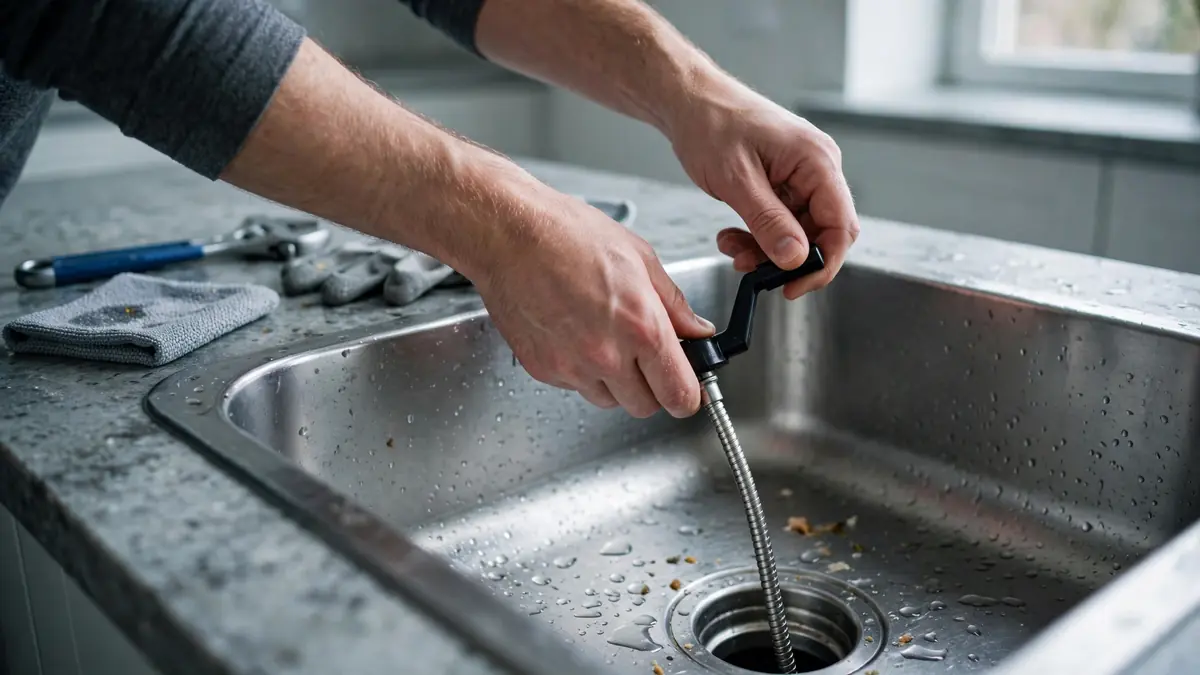
When the clog is past the trap, a hand-crank drain snake is the right tool.
- Remove the P-trap (Method 4) and feed the snake straight into the trap arm in the wall. That is easier than fighting the bends.
- Push the cable in until you feel resistance, then tighten the lock screw so about 6-8 inches of cable sticks out of the drum.
- Crank clockwise while pushing gently forward. You will feel it either break through, or grab the clog.
- Pull the cable back slowly, still turning clockwise, and wipe it off as it comes out.
- Reinstall the trap and flush with hot tap water for a few minutes.
Safety: wear gloves and eye protection. Never force the cable when it kinks. Back it out and try again. Do not run a snake right after using a chemical cleaner (see below).
Real question from a forum: “How do you unclog a sink when a snake does not work?” First confirm you went past the trap arm. Snaking through the sink opening often just spins in the trap. If a 25-foot snake fed through the trap arm cannot clear it, the clog may be in the branch line or a vent, or caused by a sagging pipe. That is the point to call a plumber with a powered drum machine and a camera.
Method 6: Enzymatic cleaners for slow drains and prevention
Enzyme or bacterial drain cleaners digest organic buildup like soap, hair oils and food film. They work slowly, usually overnight, and will not clear a full blockage. They are good for:
- slow drains with no standing water
- monthly maintenance on bathroom sinks and showers
- homes with septic systems (check the label says septic-safe)
Method 7: Chemical drain cleaners (a last resort, with caution)
Caustic (lye-based) and acid drain cleaners can dissolve some clogs, but they come with real downsides:
- They can damage older pipes and splash, causing serious burns.
- Never mix different drain products, or a drain product with bleach or ammonia. Toxic gases can form.
- If the cleaner does not work, you now have a sink full of caustic water. Do not plunge it (it splashes) and do not snake it without full eye protection. Tell a plumber which product you used.
Most plumbers recommend mechanical methods (plunger, trap clean-out, snake) first.
Does baking soda and vinegar unclog a drain?
It is the most popular home remedy, but it is weak. The fizz is carbon dioxide from an acid-base reaction that mostly neutralizes itself into salty water. It can freshen a drain and loosen a light film, but it will not dissolve a hair mat or a grease plug. If you want to try it:
- Pour 1/2 cup of baking soda into the drain.
- Follow with 1 cup of white vinegar and cover the opening.
- Wait 15-30 minutes, then flush with hot tap water.
If water still stands after one try, go straight to Methods 3-5.
Kitchen sink vs bathroom sink vs tub: what to try first
| Drain | Usual cause | Best first method |
|---|---|---|
| Bathroom sink | Hair, toothpaste, soap | Stopper clean + barbed tool |
| Kitchen sink | Grease, food scraps, coffee grounds | Plunge (other side sealed), then P-trap clean-out |
| Garbage disposal sink | Food in the disposal or trap | Power off, clear the disposal, then the trap |
| Tub / shower | Hair and soap scum | Remove the drain cover + barbed tool. See our shower drain guide. |
| Toilet | Paper, wipes, solids | Flange plunger or closet auger. See unclog a toilet without a plunger. |
Why is my drain still slow after clearing it?
- Partial clog further down. Snake further, past the trap arm.
- Blocked vent. Drains need air from the roof vent. A blocked vent causes gurgling and slow draining even with clear pipes. Clearing a roof vent means climbing on the roof, which is often a job for a plumber.
- Pipe slope or sag. Old or modified drains with too little slope collect debris. A plumber can confirm this with a camera.
- Old galvanized pipe. The inside rusts and narrows over decades. Replacing it is the long-term fix.
How to prevent clogged drains
- Never pour fats, oils or grease down the sink. Let them cool, then put them in the trash.
- Use mesh strainers in every sink and tub.
- Scrape plates into the trash, not the disposal.
- Clean bathroom stoppers monthly.
- Use an enzyme treatment monthly on slow-prone drains.
- Flush only toilet paper. “Flushable” wipes are a leading cause of sewer clogs.
When to call a plumber
- More than one fixture is backing up, or sewage comes up a floor drain
- A 25-foot snake cannot clear it
- You have already used chemicals and the drain is still full
- You smell sewer gas, or see water staining ceilings below
- Clogs keep coming back every few weeks (tree roots, broken or sagging pipe)
Plumbers can use powered drum machines, hydro jetting and sewer camera inspection to find and fix the cause, not just the symptom.
FAQs
What is the fastest way to unclog a drain?
For a bathroom sink or tub, pull the stopper and use a barbed plastic drain tool. It takes about two minutes. For a kitchen sink, plunge with the other side sealed. If water still will not drain, remove and clean the P-trap.
What do plumbers use to unclog drains?
Plumbers mainly use mechanical tools: plungers, hand augers, powered drum machines for long runs, hydro jetting (high-pressure water) for grease and roots, and sewer cameras to find the cause. Most avoid chemical drain cleaners.
Can I pour boiling water down a drain?
Only into metal pipes, and only for soap or light grease clogs. Boiling water can soften PVC pipe joints and can crack a porcelain toilet. Very hot tap water is a safer choice for most homes.
Does baking soda and vinegar really unclog drains?
Rarely. The reaction mostly neutralizes itself and cannot break up hair or grease plugs. It is fine for freshening a drain or loosening a light film, but use a plunger, trap clean-out or snake for real clogs.
How do I unclog a drain without chemicals?
Clean the stopper, use a barbed plastic drain tool, plunge with the overflow sealed, clean out the P-trap and run a hand drain snake. These mechanical methods clear most household clogs without any chemicals.
Why do both sides of my kitchen sink clog at once?
The two sides share one trap and drain line, so a clog at or below the trap blocks both. Seal one side while you plunge the other, then clean the trap or snake the line beyond it.
How do I know if my main sewer line is clogged?
Warning signs include several drains backing up at once, a toilet that gurgles or bubbles when other fixtures drain, and water rising in a floor drain or basement shower. Stop using water and call a plumber.
Is it safe to plunge after using Drano?
No. Plunging can splash caustic chemicals onto your skin and eyes. Flush with plenty of water if the drain allows it, or call a plumber and tell them what product is in the pipe.
Sources and standards
- International Plumbing Code (IPC) / Uniform Plumbing Code (UPC): trap and vent requirements (why fixtures need traps and vents)
- U.S. EPA: guidance on household chemical safety (never mix cleaning products)
- Drain cleaner product labels (warnings and pipe compatibility)
About the author: Tony T. Johnson, founder and lead editor of HomeRevampDaily.