What Is LVP Flooring? A Plain-English Guide to Luxury Vinyl Plank
Last updated: October 2026 · By Tony T. Johnson
Quick answer: LVP flooring (luxury vinyl plank) is a multi-layer vinyl floor made to look like hardwood. A clear protective wear layer sits over a high-resolution printed wood image, on top of a vinyl or rigid composite core. Most LVP is waterproof, scratch-resistant and installed as a click-together floating floor, which makes it a popular, budget-friendly alternative to hardwood in kitchens, bathrooms and basements.
LVP has become one of the most installed floors in American homes because it fixes hardwood’s biggest weakness, water, at a lower price. But not all LVP is the same. Two planks that look identical in the store can perform very differently in your home. This guide explains what LVP actually is, how to read the specs, and where it does (and doesn’t) make sense.
What LVP flooring is made of (the layers)
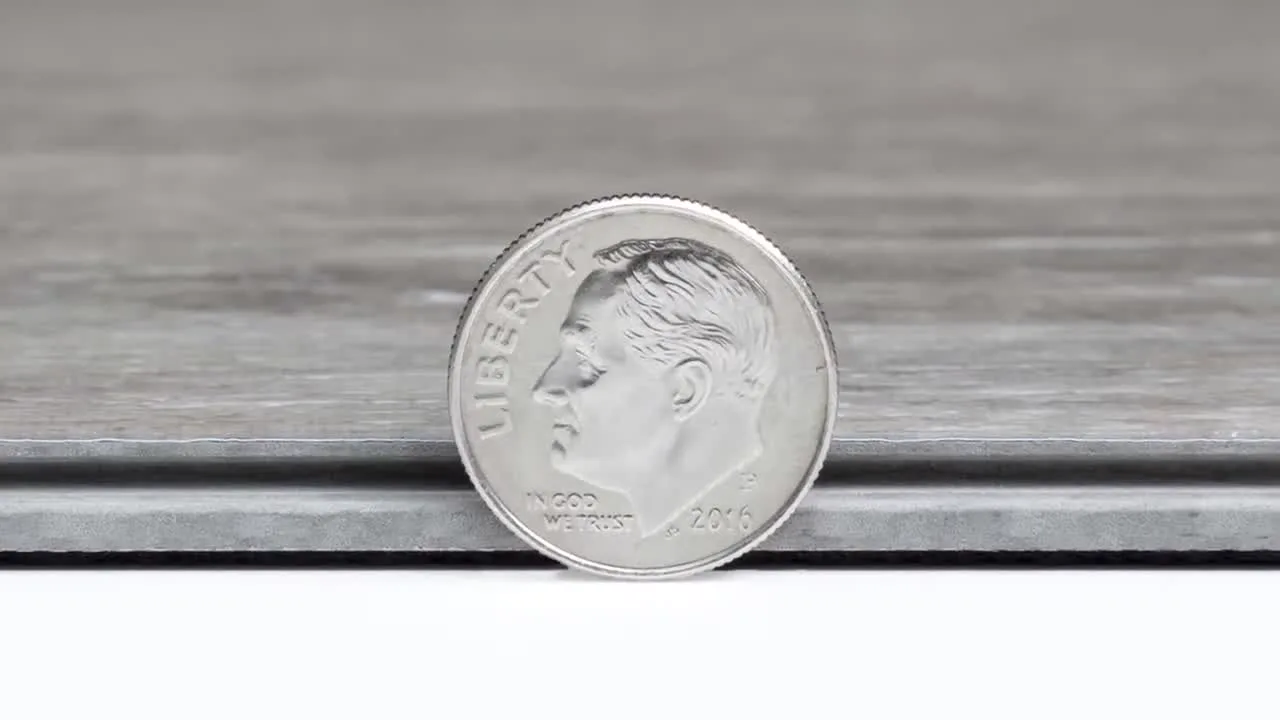
From top to bottom, a typical rigid-core LVP plank has:
| Layer | What it does |
|---|---|
| Top coating (urethane, often with aluminum oxide or ceramic beads) | Resists scuffs, stains and fading |
| Wear layer (clear vinyl, measured in mils) | The main protection against scratches and wear. Thicker is tougher. |
| Printed design layer | A high-resolution photo of real wood (or stone) |
| Core | Gives the plank its stability. Flexible vinyl, WPC or SPC (see below). |
| Attached underlayment (on many planks) | A foam (IXPE) or cork pad that softens sound and underfoot feel |
Better LVP adds embossed-in-register (EIR) texture: the surface grain lines up with the printed knots and grain, so it feels like wood, not just looks like it.
What does “mil” mean? A mil is one-thousandth of an inch. It’s not the same as a millimeter. A 20-mil wear layer is about 0.5 mm thick.
Types of LVP flooring
By core
| Core type | What it is | Feel | Best for |
|---|---|---|---|
| Flexible LVP (thin, often glue-down) | Solid vinyl throughout | Thin and flexible | Commercial spaces, very flat floors, budget installs |
| WPC (wood-plastic or waterproof core) | Foamed PVC core | Softer, warmer and quieter underfoot | Bedrooms, living areas, comfort-focused rooms |
| SPC (stone-plastic composite) | Limestone powder + PVC; dense and rigid | Harder, more dent-resistant, hides minor subfloor flaws | Kitchens, basements, high-traffic and sunny areas |
Real question from a forum: “Is EVP better than LVP because LVP warps in heat?”
“EVP” (engineered vinyl plank) is a marketing name for rigid-core vinyl, mostly WPC or SPC. Rigid cores, especially SPC, generally handle temperature swings and direct sun better than thin flexible vinyl. Read the spec sheet for the core type and the manufacturer’s temperature and sunlight guidance rather than relying on the label.
By installation method
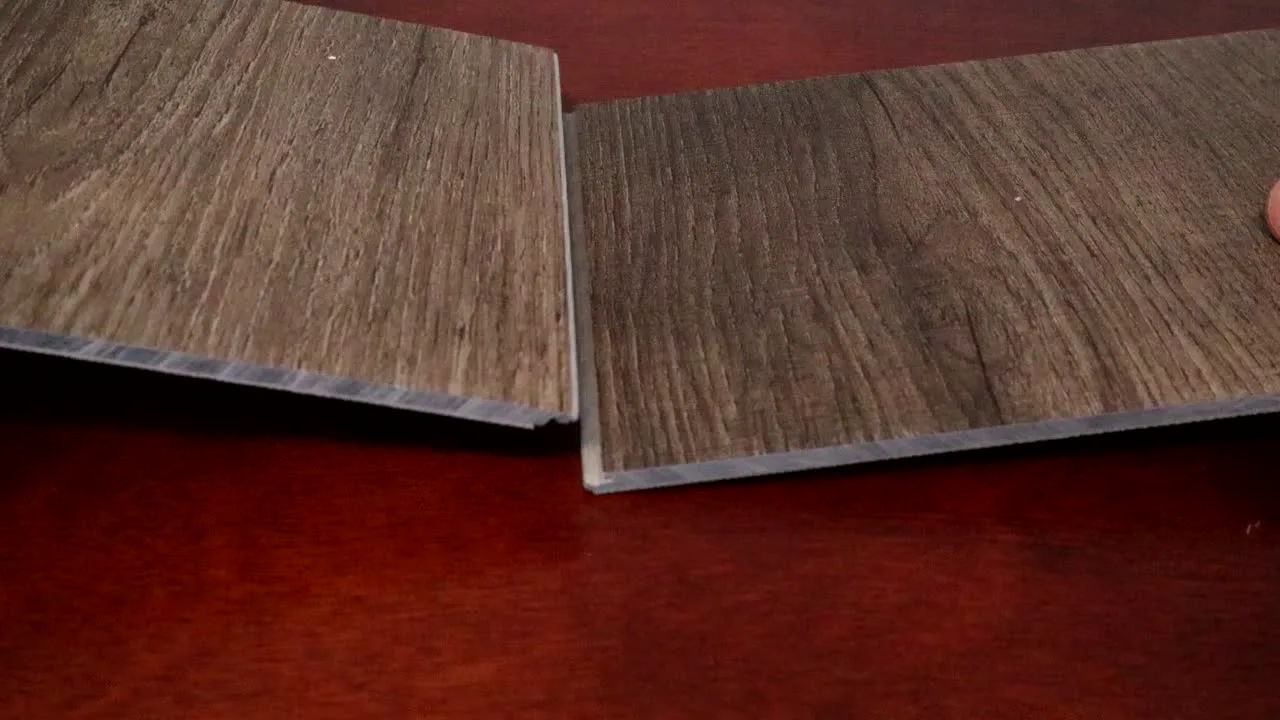
- Click-lock (floating): planks lock edge to edge and “float” over the subfloor without glue or nails. Most DIY-friendly.
- Glue-down (dry-back): thin planks glued to the subfloor. Very stable in large areas or rooms with rolling loads, but harder to install and remove.
- Loose-lay: heavy, flexible planks held by friction and weight. Less common in homes.
LVP vs LVT
LVP is plank-shaped and usually looks like wood. LVT (luxury vinyl tile) is tile-shaped and usually looks like stone or ceramic. They’re the same material family.
How to read an LVP spec sheet
| Spec | What to look for |
|---|---|
| Wear layer | 6–8 mil: light use (closets, guest rooms) · 12 mil: typical residential · 20 mil+: busy homes, pets, kids, kitchens · 28 mil+: commercial |
| Total thickness | Most rigid-core planks are roughly 4–8 mm. Thicker feels more solid, but the wear layer and core matter more. |
| Core type | SPC for density and sun or temperature swings. WPC for comfort and quiet. |
| Attached pad | Saves a step, but don’t add a second pad unless the manufacturer allows it. Extra padding can stress the locking joints. |
| Waterproof rating | Look for “waterproof core”. Check what the warranty says about water and pets. |
| Indoor air quality | FloorScore certification means the product meets California’s indoor-emissions standard for VOCs. |
| Warranty | Read the exclusions: direct sunlight, temperature limits, heavy furniture, improper subfloor. |
Pros of LVP flooring
- Waterproof planks: spills and pet accidents won’t swell the plank itself.
- Realistic wood look at a lower cost than most hardwood.
- Durable surface: scratch- and stain-resistant with a good wear layer.
- DIY-friendly: click-lock floating installs need basic tools (see our installation guide).
- Comfortable and quieter than tile, especially with an attached pad.
- Works below grade: basements where solid hardwood isn’t recommended.
- Easy care: sweep, vacuum and damp-mop.
- Easy to replace: individual planks in a floating floor can be swapped.
Cons of LVP flooring
- “Waterproof” has limits. The planks are waterproof, but water can seep through seams and around edges to the subfloor, where it can cause mold or swelling if it sits. Clean up spills promptly. Floods still damage what’s underneath.
- Heat and sun: direct sun through large windows can fade some products and cause expansion. That can lead to gaps or buckling. Use window coverings and follow the manufacturer’s temperature limits.
- Dents: heavy furniture and appliances can leave dents, especially in softer WPC. Use wide furniture protectors.
- Can’t be refinished. Once the wear layer is worn through, the plank must be replaced.
- Quality varies a lot. Thin, cheap products can curl, crack or separate at the joints.
- Environmental concerns: LVP is PVC-based plastic, and it’s hard to recycle.
- Resale perception: many buyers see quality LVP as a plus in kitchens, baths and basements, but in higher-end homes some buyers expect real hardwood in main living areas.
Real question from a forum: “Will LVP cheapen my house if we sell?”
In most mid-range homes, good-quality LVP is seen as a durable, modern upgrade, especially over worn carpet or dated tile. In high-end homes, or where existing hardwood can be refinished, replacing real wood with vinyl can be a step down in buyers’ eyes. Match your neighborhood: look at what recently sold homes nearby have.
LVP vs laminate vs hardwood
| Feature | LVP | Laminate | Engineered hardwood | Solid hardwood |
|---|---|---|---|---|
| Core | Vinyl / WPC / SPC | High-density fiberboard (wood) | Plywood + real wood veneer | Solid wood |
| Water | Waterproof plank | Water-resistant at best (some newer types better). Swells if soaked. | Not waterproof | Not waterproof |
| Scratch resistance | Good (depends on wear layer) | Very good (hard surface) | Moderate | Moderate (softer species dent) |
| Feel / sound | Warm, quiet, softer | Harder, can sound hollow | Real wood | Real wood |
| Refinishable | No | No | Sometimes (thick veneer) | Yes, many times |
| Basements | Yes | Generally not recommended | Some products | Not recommended |
| Typical cost | Low–mid | Low–mid | Mid–high | High |
LVP vs sheet vinyl vs linoleum
Sheet vinyl comes in large rolls, is thinner and is often cheaper. Linoleum is a different material altogether, made from natural linseed oil, cork and wood flour. Many people say “linoleum” when they mean sheet vinyl.
Where LVP works best (room by room)
| Room | LVP? | Notes |
|---|---|---|
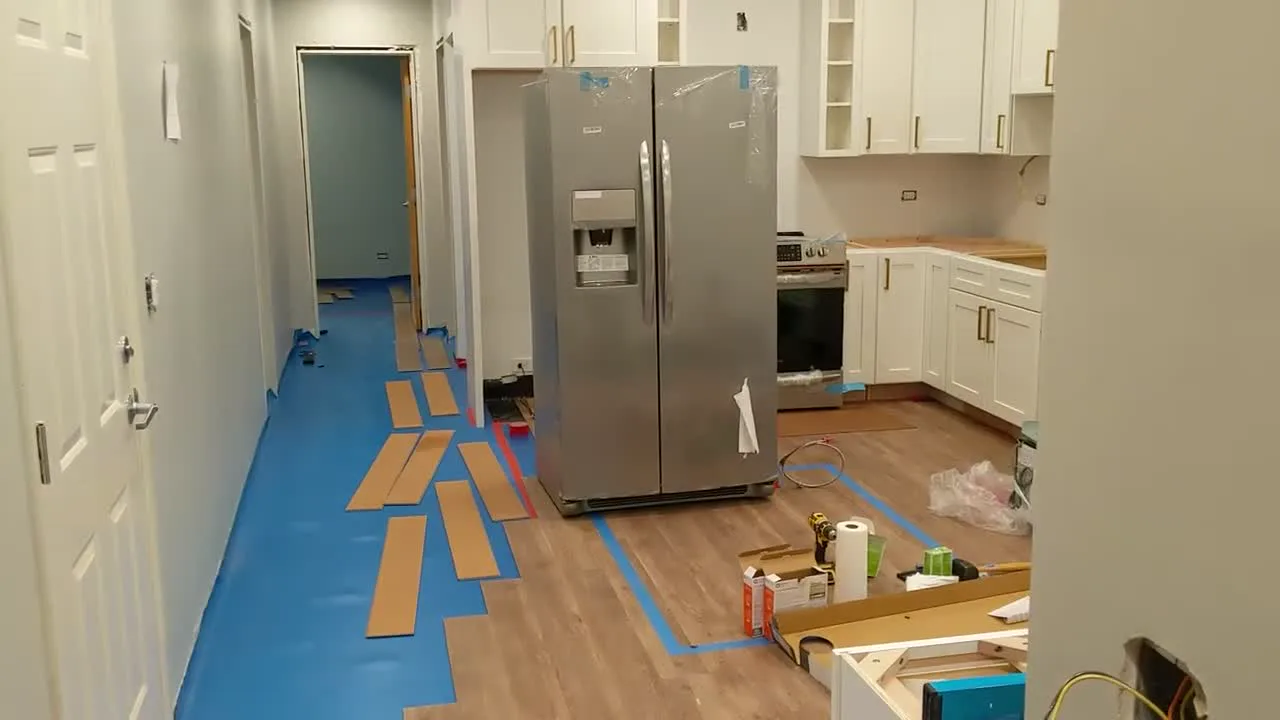
| Kitchen | ✅ Excellent | Choose a 20 mil+ wear layer and SPC for dent resistance. Install after cabinets (floating floors shouldn’t be pinned under cabinets). |
| Bathroom | ✅ Good | Seal the perimeter as the manufacturer directs. Wipe up standing water. |
| Basement | ✅ Excellent | Check concrete moisture first. Use a vapor barrier if the manufacturer requires one. |
| Living / bedrooms | ✅ Good | WPC gives a warmer feel. |
| Sunrooms / big south-facing windows | ⚠️ Caution | Choose a product rated for it, and use window coverings. |
| Unheated cabins, 3-season porches | ⚠️ Check | Many products have temperature limits. |
| Rentals | ✅ Very popular | Tough, waterproof, and single planks are easy to replace. |
Real question from a forum: “Can LVP go directly over ceramic tile? Will pet accidents seep through?”
Many rigid-core products can float over sound, flat tile, if the grout lines aren’t deeper or wider than the manufacturer allows. Otherwise, skim them with a floor-patch compound first. Pet urine won’t hurt the planks, but it can seep through seams if left, so clean it quickly. For homes with pets, choose a product whose warranty covers pet accidents.
LVP and your health: VOCs and certifications
Choose LVP with FloorScore certification for low VOC emissions, and ventilate the room for a few days after installation. Many major brands now advertise phthalate-free products. Check the product documentation if that matters to you.
How to care for LVP flooring
- Sweep or vacuum (hard-floor setting, no beater bar) regularly.
- Damp-mop with a pH-neutral cleaner made for vinyl. Avoid steam mops, abrasive pads, wax and oil soaps unless the manufacturer allows them.
- Use felt pads under furniture, and wide protectors under heavy pieces.
- Put mats at entries, but avoid rubber-backed mats, which can stain some vinyl.
- Use window coverings in direct sun.
How long does LVP last?
A quality LVP floor with an appropriate wear layer commonly lasts 10–20 years or more in residential use. Lifespan depends heavily on the wear layer, the traffic, sun exposure and the installation. Check the manufacturer’s residential warranty term for the specific product.
Buyer’s checklist (avoid the cheap-LVP regrets)
- [ ] Wear layer of at least 12 mil (20 mil+ for pets, kids or kitchens)
- [ ] Rigid core (SPC or WPC) for DIY floating installs
- [ ] FloorScore certified
- [ ] Attached pad, or the manufacturer-approved underlayment
- [ ] Order a sample, flex it, scratch-test it with a key and check the locking joint
- [ ] Read the warranty exclusions (sun, temperature, subfloor flatness)
- [ ] Buy 5–10% extra from the same production lot, and keep a box for repairs
FAQs
What does LVP stand for?
LVP stands for luxury vinyl plank: a multi-layer vinyl flooring shaped like wood planks, with a realistic printed wood look and a protective wear layer on top.
Is LVP flooring waterproof?
Most LVP planks are waterproof, meaning water won’t swell or damage the plank. Water can still seep through seams to the subfloor, so wipe up spills and standing water promptly. Floods can damage the subfloor beneath any floating floor.
Is LVP better than laminate?
LVP is better where water is a concern (kitchens, bathrooms, basements) because the planks are waterproof. Laminate is often more scratch-resistant and can feel more like wood, but its wood-fiber core can swell when soaked.
What wear layer thickness should I get?
For most homes, 12 mil is the minimum for living spaces. Choose 20 mil or more for kitchens, entryways and homes with pets or kids. 28 mil and up is commercial grade.
What is the difference between SPC and WPC?
SPC (stone-plastic composite) has a dense limestone-and-PVC core that’s rigid and very dent-resistant. WPC (wood-plastic or waterproof core) has a foamed PVC core that feels softer, warmer and quieter but dents more easily.
Does LVP scratch easily?
Quality LVP resists everyday scratches well, thanks to its wear layer and top coating. Sharp objects, sand and dragged furniture can still scratch it. Use felt pads, entry mats and pet nail trims to protect it.
Can you put LVP in a basement?
Yes. LVP is one of the best basement flooring choices, because the planks aren’t harmed by moisture. Test the concrete for moisture and follow the manufacturer’s vapor barrier requirements.
Is LVP flooring toxic?
LVP is made from PVC. Products with FloorScore certification meet strict indoor VOC emission limits, and many brands are phthalate-free. Ventilate well after installation and choose certified products.
About the author: Tony T. Johnson, founder and lead editor of HomeRevampDaily.